The isolation was supposed to be the cure. That was what the brochure promised, in so many words, and that was what Elias Thorne had told himself when he signed the six-month contract. No cell service, no internet, just the rhythmic sweep of the Fresnel lens and the churning, gray violence of the Atlantic crashing against the base of Blackwood Rock.
For the first three weeks, it worked. The silence in Elias’s head had finally begun to drown out the noise of Boston—the flashing cameras, the court summons, the face of the girl he hadn’t been able to save. Here, twenty miles off the coast, the only reality was the maintenance of the Light.
But on the twenty-second night, the storm rolled in.
It wasn't a typical squall. The barometer in the lower galley had dropped so fast Elias thought the needle was broken. The wind didn't howl; it screamed, a high-pitched, harmonic vibration that shook the granite tower down to its bedrock roots.
Elias stood in the lantern room, seventy feet above the roiling black water. The heat from the massive bulb warmed his back, while the glass in front of him was freezing, battered by rain that hit with the force of gravel. He checked the rotation gears. Smooth. He checked the backup generator levels. Full.
He was safe. He was secure.
Then, why did he feel like he was being watched?
He shook the feeling off, attributing it to the "lighthouse madness" the old salts at the harbor warned him about. Cabin fever, they called it. The Blackwood stare.
Elias wiped his grease-stained hands on a rag and descended the spiral iron staircase. The sound of his boots on the metal rang out, a hollow, lonely clangor that usually comforted him. Tonight, it sounded like a countdown.
He reached the living quarters, a circular room lined with teak wood that smelled of salt and old pipe tobacco. He went to the desk to log the hourly weather report.
02:00 Hours.
Wind: NNE, 65 knots.
Visibility: Zero.
Sea State: High.
Status: All clear.
He closed the official leather-bound logbook. As he did, the vibration of the storm knocked a heavy brass sextant off the upper shelf. It hit the floor with a deafening crash, rolling under the heavy oak desk that was bolted to the floor.
Cursing softly, Elias got down on his hands and knees. The floorboards here were original, dark wood worn smooth by a century of pacing keepers. He reached under the desk, his fingers brushing against the cold metal of the sextant.
His knuckles Rap against a floorboard that sounded wrong.
It wasn't the solid thud of timber over stone. It was a hollow, wooden clack.
Elias frowned. He pulled the sextant out and set it aside. He tapped the board again. Hollow. He ran his fingers along the seam. Unlike the others, which were sealed with ancient, hardened tar, this one had a fresh groove. Someone had pried it up recently.
He pulled a pocketknife from his trousers, wedging the blade into the gap. With a groan of protesting wood, the short plank popped up.
Beneath it lay a cavity, no larger than a cigar box. Inside, wrapped in oilcloth, was a black notebook.
Elias sat back on his heels, the storm outside momentarily forgotten. The official logbook was on the desk. This was something else.
He unwrapped the oilcloth. The notebook was cheap, water-stained, the kind you’d buy at a drugstore for a dollar. On the inside cover, written in a jagged, frantic hand, was a name: Arthur Vance.
Elias’s breath hitched. Arthur Vance was the previous keeper. The agency had told Elias that Vance had suffered a stroke and was airlifted out. A tragic, medical emergency.
Elias opened the book. The first few pages were mundane—inventory lists, complaints about the canned food, sketches of seagulls. But as the dates progressed toward the end of Vance's tenure, the handwriting deteriorated. The ink pressed harder into the paper.
October 14th:
The frequency is wrong. I checked the radio calibration three times. The static isn’t random. There’s a pattern in the white noise. It sounds like breathing.
October 20th:
I saw it again tonight. Not a ship. No running lights, no transponder signal. Just a shadow, darker than the ocean, cutting through the swells. It stopped right at the edge of the Light’s reach. It sat there for an hour. Watching.
October 24th:
The agency lied. They told me the modification to the lens was for "fog penetration." I looked up the specs. The prism they installed doesn't just magnify light; it filters it. It emits a UV pulse every seven seconds. We aren't warning ships away. We are a beacon. We are calling something home.
Elias felt a chill that had nothing to do with the drafty tower. He looked up at the ceiling, toward the lantern room above. The prism. He had polished it every day. It did look strange—the glass had a faint, violet hue he hadn’t seen in other lighthouses.
He turned to the final entry, dated the day Vance was supposedly airlifted.
October 31st:
They are coming up the rocks. The storm covers the sound of their climbing, but I can smell the brine. I’ve locked the lower door, but the iron is rusting. If you are reading this, turn off the Light. For the love of God, kill the Light.
The entry ended in a streak of ink, as if the pen had been ripped away.
Elias slammed the book shut. Crazy, he thought. The man went stir-crazy. Paranoia. Hallucinations. It happened. The isolation broke people. The agency had covered up a mental breakdown, not a stroke, to avoid bad press. That made sense.
Clang.
The sound came from below. Far below.
Elias froze. The lighthouse had six levels. He was on level four, the living quarters. Below him was the storage level, then the generator room, and finally, the heavy iron entry door at the base, accessible only from the concrete jetty that was currently being washed by thirty-foot waves.
Clang.
It was metal on metal. The sound of the locking bar on the main door being struck.
Elias stood up, his heart hammering against his ribs like a trapped bird. Debris, he told himself. A log thrown by the waves.
He grabbed the heavy flashlight from the wall and a flare gun from the emergency kit. He didn't know why he took the gun—he was a rational man, a journalist who dealt in facts—but Vance’s diary was burning a hole in his mind.
He opened the hatch to the stairs and began to descend.
Level three. Storage. Crates of beans, drums of diesel fuel. The air was colder here.
Level two. The generator room. The massive diesel engine chugged rhythmically, the heartbeat of the tower.
He reached the bottom of the spiral stairs. He was standing on the cold concrete floor of the entryway. The heavy iron door, reinforced to withstand hurricanes, stood before him.
It was vibrating.
Someone was on the other side.
Elias raised the flashlight. "Hello?" his voice cracked. "Who's there?"
The pounding stopped instantly.
The silence that followed was heavier than the storm. Elias took a step forward, the beam of his light trembling on the rusted iron surface.
"I have a flare gun," he shouted, feeling ridiculous. "Identify yourself."
A sound came through the thick metal. It wasn't the roar of the wind. It was a scrape. Sharp, deliberate. Like a knife being dragged across a chalkboard.
Then, a voice. It didn't sound like it came from a throat. It sounded wet, gurgling, muffled by the storm and the steel.
"Open... for... Arthur."
Elias stumbled back, tripping over a coil of rope. Arthur. Arthur Vance was gone. He was in a nursing home in Maine.
"Go away!" Elias screamed.
The pounding returned, but this time, it wasn't a fist. It was a rhythmic, mechanical thud-thud-thud that shook dust from the ceiling. The heavy iron locking bar, a solid beam of steel three inches thick, groaned.
Elias scrambled up the stairs. He didn't look back. He ran past the generator, past the storage, back into the living quarters. He slammed the hatch shut and spun the locking wheel.
He was panting, sweat stinging his eyes. He grabbed the radio handset.
"Mayday, Mayday, this is Blackwood Light. I have an intruder. Attempted break-in. Requesting immediate assistance."
Static.
He adjusted the squelch. "Coast Guard, this is Blackwood. Do you copy?"
The static cleared for a second. A voice cut through.
"...keep the light on... keep it on... keep it on..."
It wasn't the Coast Guard. It was a loop. A recording.
Elias stared at the radio. He followed the cable from the back of the set. It went into the wall, up toward the lantern room.
We are a beacon.
He dropped the radio and ran to the window. It was pitch black outside, the storm raging. But as the great beam of the lighthouse swung around—that piercing, white light—it illuminated the ocean surface for a split second.
Elias pressed his face against the cold glass.
The beam swept out. One second. Two seconds.
There.
In the trough of a massive wave, a hundred yards out, something was rising. It wasn't a ship. It was a structure. A black, spire-like monolith of wet metal and slime, breaching the surface like a surfacing submarine. But it was jagged, organic, wrong.
And clinging to the sides of the lighthouse, illuminated briefly by the reflection of the beam against the rain, were shapes.
Humanoid, but too long. Limbs with too many joints. They were scaling the granite tower like insects, their pale bodies stark against the dark stone.
They weren't at the bottom door anymore. They were climbing.
Elias backed away from the window, horror seizing his muscles. Vance was right. The light. The specific frequency. It was calling them.
Turn off the light.
He looked up at the ceiling hatch. The lantern room. He had to kill the power.
He scrambled up the final flight of stairs into the glass-walled cupola. The noise of the storm was deafening here. The giant brass gears turned; the Fresnel lens, a masterpiece of physics, rotated with terrifying indifference, sending its pulse out into the dark.
Elias ran to the control pedestal. There was the main breaker. A large red lever.
He gripped it.
"Don't," a voice said.
Elias spun around.
Standing in the shadows of the lantern room, squeezed between the gear mechanism and the glass, was a man. He was gaunt, his skin gray and peeling, his beard matted with salt and kelp. He wore the tattered remnants of a uniform.
"Arthur?" Elias whispered.
The man stepped into the light. His eyes were gone, replaced by milky white cataracts, yet he looked directly at Elias. He held a large wrench in one hand.
"You can't turn it off," Arthur rasped, his voice sounding like grinding stones. "If you turn it off, they get angry. If you turn it off, they come inside."
"They're already coming inside!" Elias yelled, gesturing to the glass.
Outside, a hand slapped against the pane. It was webbed, translucent, the fingers ending in black claws. Then another hand. Then a face pressed against the reinforced glass. It was a nightmare of teeth and deep-sea pressure, eyes the size of saucers staring hungrily at the bulb.
Arthur let out a whimper. "No, no. They just want to look. They worship the light. As long as it shines, they stay outside. They bask in it."
"They're climbing the tower, Arthur! They aren't basking!"
Elias looked at the breaker. He looked at the monsters pressing against the glass. The glass was three inches thick, but a hairline crack appeared under the pressure of the creature's palm.
"The journal," Elias said. "You wrote to kill the light."
"I was wrong!" Arthur screamed, raising the wrench. "I tried! I turned it off for ten seconds. That’s how they got in. That’s how they got me. They need the heat, Elias. It's so cold down there."
The crack in the glass lengthened with a sickening pop.
Elias realized the truth. The light wasn't summoning them to attack; it was a pacifier. A heat lamp for things that lived in the crushing dark. But the storm... the storm had made them bold. Or maybe hungry.
"We have to go," Elias said, gripping the flare gun. "Down the stairs. The lower door holds."
"The lower door is open," Arthur smiled, a gruesome, watery expression. "I let my brothers in."
Elias stared at him. The man wasn't a survivor. He was a thrall.
The glass shattered.
The sound was explosive. Wind and rain blasted into the lantern room, extinguishing the warmth instantly. The roar of the storm mixed with a high-pitched, chittering shriek from the creature pouring through the breach.
Elias didn't think. He raised the flare gun and fired.
The red phosphorus round hit the creature in the chest. It didn't burn like normal flesh; it sizzled and popped. The creature recoiled, shrieking, tumbling backward out of the hole and falling seventy feet into the darkness.
But three more were squeezing through.
Arthur lunged at Elias, swinging the wrench. Elias ducked, the heavy iron grazing his shoulder, numbing his arm. He tackled the older man, driving him back against the rotating gears. Arthur possessed an unnatural, hydraulic strength. He grabbed Elias’s throat, his fingers ice-cold and slick.
"Let them in," Arthur gurgled. "Join the shoal."
Elias gasped for air, black spots dancing in his vision. He kicked out, his boot connecting with Arthur’s knee. The bone snapped with a wet crunch. Arthur howled and loosened his grip.
Elias rolled away, coughing. He looked at the control panel. The main breaker.
The creatures were inside now. Two of them, crouched on the catwalk, their skin glistening in the strobe of the rotating light. They ignored Elias. They were staring at the bulb, mesmerized, inching toward it like moths.
Arthur was dragging himself across the floor, reaching for Elias’s ankle.
"Don't you dare," Arthur hissed.
Elias looked at the monsters. They were entranced. If he killed the light, the trance would break. They would see him. They would tear him apart.
But if he left it on, more would come. The monolith in the water. The army climbing the walls.
And Arthur... Arthur had said I let my brothers in.
They were in the tower. Below him. Between him and the exit.
He was trapped at the top of the world with the monsters of the deep.
Elias looked at the creatures, then at the breaker, then at the shattered window where the storm poured in. He realized he had one option left. A gamble that would either save him or end him.
He grabbed the emergency axe from the wall mount.
He didn't swing at the creatures. He didn't swing at Arthur.
He swung at the rotation mechanism.
Clang!
The gear teeth shattered. The massive Fresnel lens groaned and ground to a halt.
The beam stopped sweeping. It became a fixed, blinding spotlight, pointing straight out the shattered window, into the heart of the storm.
The creatures hissed, shielding their eyes from the concentrated, unmoving intensity. The beam was no longer strobing; it was burning.
Elias didn't wait to see if they adjusted. He grabbed the can of kerosene used for cleaning the gears. He splashed it across the floor, across the stairs leading down, and kicked the can toward the screaming Arthur.
He pulled a flare from his pocket. He didn't have the gun anymore. He struck the cap against the floor. It hissed into brilliant red life.
"You like the heat?" Elias yelled over the wind.
He dropped the flare.
The fire roared to life, a wall of flame separating him from the creatures and the stairs. The heat was instantaneous and unbearable. The creatures shrieked—a sound of pure panic.
Elias turned to the shattered window. The ledge was narrow. The drop was fatal. The waves below were death.
But inside was hell.
He climbed onto the window ledge, the gale force wind threatening to peel him off the structure. He looked down. The waves were smashing against the rocks, foaming white.
He looked back inside. Through the wall of fire, he saw the creatures retreating from the flames, but also... he saw the hatch to the stairs burst open. More of them were pouring in from below, driven up by the fire he’d just started.
He had nowhere to go.
Except up.
The lightning rod. It ran up the side of the copper dome to the weather vane at the very pinnacle of the lighthouse.
Elias reached up, his fingers grasping the cold, wet copper. He pulled himself out of the lantern room, dangling over the abyss. The wind battered him, trying to tear his grip loose.
He scrambled up the slick dome, inch by inch, as the fire below began to consume the lantern room. The glass exploded outward from the heat, showering sparks into the night.
Elias reached the weather vane and wrapped his belt around it, strapping himself to the highest point of Blackwood Rock.
Below him, the lighthouse became a torch. The beam still cut through the dark, a solid shaft of light, but now it was joined by the chaotic flickering of the fire.
And then, in the light of the flames, Elias looked out at the water.
The monolith was moving. The massive black shape in the ocean was coming closer, drawn to the massive bonfire Elias had created.
It rose higher, towering over the waves. It wasn't a ship. It wasn't a building.
It was a head.
A colossal, ancient face broke the surface, water cascading off scales the size of cars. Huge, milky eyes reflected the burning lighthouse. It opened a maw that could swallow the tower whole.
Elias laughed. It was a hysterical, broken sound lost to the wind.
He reached into his pocket and pulled out his phone. No signal. Of course, no signal. But he opened the voice recorder app.
"My name is Elias Thorne," he shouted into the microphone, shielding it from the rain with his trembling hand. "I am at Blackwood Rock. The light is gone. The keeper is dead."
He looked down. The fire was climbing the tower. The creatures were swarming the outside now, fleeing the heat, crawling up toward him.
He looked out. The titan in the water raised a massive appendage, crashing it down onto the jetty, crumbling the concrete like a cracker.
"If you find this," Elias said, his voice dropping to a whisper as the first pale hand crested the dome of the roof, "don't come looking for me. And for God's sake..."
The metal groaned beneath him. The tower tilted.
"...never light the lamp."
Elias stopped recording. He slipped the phone into his waterproof breast pocket and zipped it shut.
The pale hand grabbed his boot.
Elias unbuckled his belt. He looked at the raging black water below, then at the creature pulling him down.
He jumped.
What did you think?
Loved this sample?
This is just the beginning. Get the complete book to uncover the rest of the mystery.
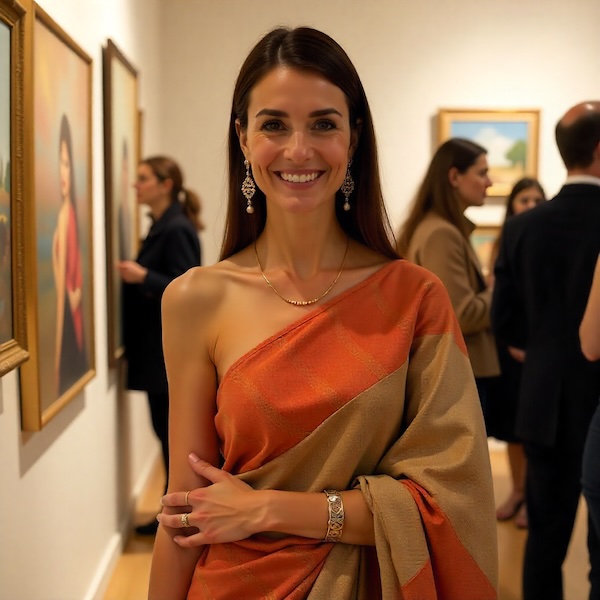
Written byElena
Elena is a young professional from Mumbai who balances her corporate career with the city's vibrant culture. She loves exploring local street food, attending art events, and walking along Marine Drive. A true Mumbaikar, she embodies the city's blend of ambition and warmth, tradition and modernity.
Comments (0)
Join the conversation about this story
Sign in to commentNo comments yet
Be the first to share your thoughts about this story!